
 “The root intellectual problem with psychiatry is that there is no coherent infrastructure of knowledge about what humans do, how they do it and why they do it.” This is where it all began and where, for the most part, it remained. We talked at each other for awhile, but really this was his central point and mine was simply a “Yes, but…” that fell on deaf ears. However, I’ve been unable to quit the echoes and their many possibilities, and so here we are.
And who are we? Well, your humble narrator (of course) and his friend Ian who works in a lab that engages in neuro-scientific studies. Ian and I somehow stumbled upon the topic of psychiatry, and this caused him to express his disdain for what he referred to as “not a science at all.” I asked him to expound upon the subject and that was when he made the above statement, along with the following explanation:
“This is not to say that human behavior can’t be studied in a systematic way, it’s just that due to the age of the field I don’t think they have historically been very systematic, until recently. And even now, when psychiatric research tries to make assertions about how humans work from a behavioral perspective, they can often only look at broad populations, and many times the observations cannot be applied to individuals. This is contrasted to biological research which aims to describe a system (and always attempts to tackle systems less complex than human behavior) which have causal relationships whereby some stimulus produces some effect. And if no causation can be found than the system is not adequately understood and no assertions can be made.
This is the basis of my problem with psychiatry. Because by it’s nature human behavior is extremely complex, and [psychiatrists] have started making assertions about a system that is not fully understood. At least with cellular processes you can find cause and effect relationships which can be combined to explain ever larger systems within a cell.”
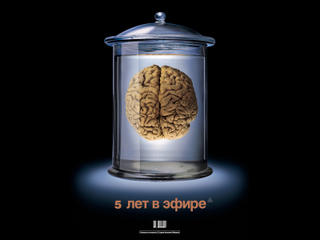
I understood the logic of these statements, and could possibly agree with their conclusion, except for the fact that implicit in the final paragraph is a faith in the scientific method that I simply don’t possess. So although I was not disagreeing with him, we seemed to be debating because I was calling scientific assumptions into question. Such as, “Can cellular activities really provide you insight into the human psyche? Will all of your mechanical analysis really lead to a more profound understanding than the questionable practices of psychiatrists?”
My contention was that the brain, as matter, cannot ever fully reveal the complexities of the self. In the same way that an analysis of the self (psychiatric or otherwise) would never actually explain or help to picture the brain or its devices. This would have been an easier point to make if I had been arguing for the existence of a “soul” or “spirit” in which our conciousness might be personified. But I wasn’t and am not. I do not agree with that approach either.
What then? It isn’t productive nor profound to simply deny it all. But it is far too complex an issue to feel comfortable with any sort of explanation, so in a way the real answer lies in the void. A person cannot simply live inside the mind, nor may he live without one. Where does vision actually see? And where do thoughts remember?
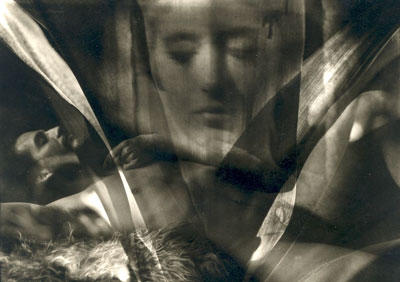
I tried to explain these things to Ian, only to realize that more words actually gave me less to explain. I do think his approach is valid, but I also feel confident that my psychiatrist does know some things about the things that make me tick. However, it is the artist who plays around and imagines that gets closer to the truth then either of the other two. If only there were a way to take them all at once, place one on top of the other and take them apart at the same time.


 Me and Mr. Jones